The 10 most beautiful castles in Germany
Ask ten people for Germany’s most beautiful castle and you will hear several answers: towers on a crag, a Rococo palace above a vineyard, a red ruin above a river town. This list has all of them. Every castle here can be visited, and we have ordered them roughly from south to north.
Bavaria: two palaces of Ludwig II
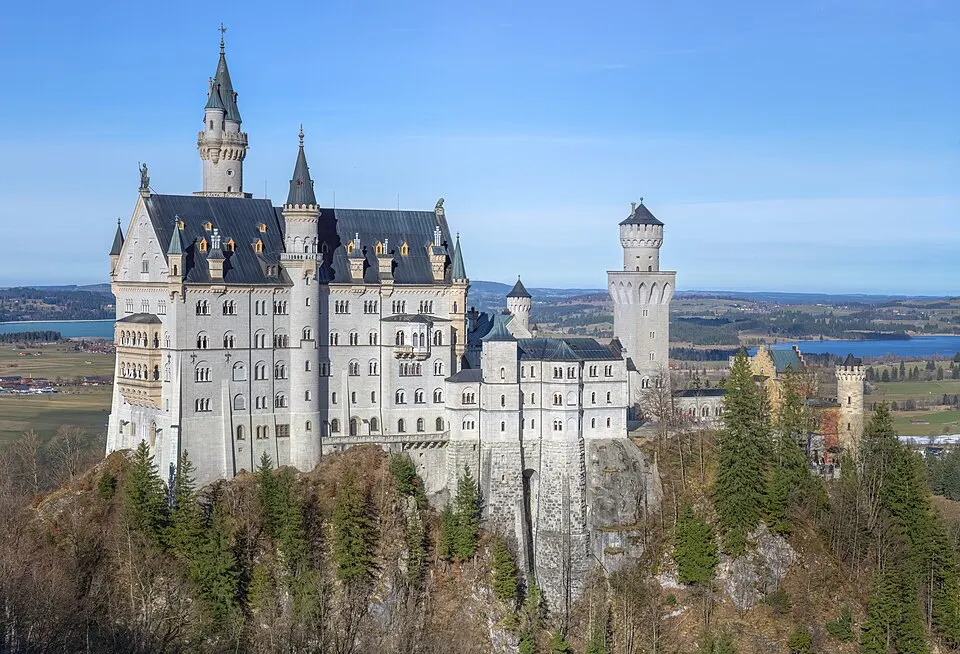
Neuschwanstein Castle is probably the most famous castle on this list. Inspired by the Wartburg and the Château de Pierrefonds, King Ludwig II had the foundation stone of a Neo-Romanesque knight’s castle laid in 1869. It was still unfinished when he died in 1886, and he lived in it for just 172 days in total. Six weeks after his death, it opened to visitors. In the Throne Hall, look down: the floor is a mosaic of more than 1.5 million small pieces of natural stone.
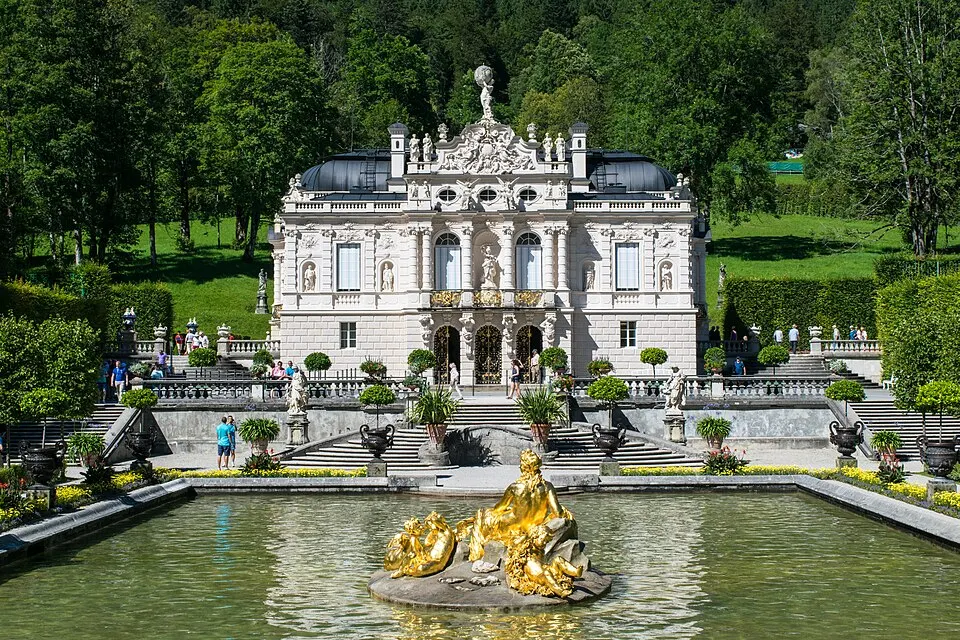
Linderhof Palace was Ludwig’s favourite. It is the smallest of his three palaces and the only one he saw completed. Behind the plaster façade, the building is made entirely of wood. Its best-known detail is the dining table, which could be lowered into the kitchen and laid there, so the king could dine without servants. In the park, the artificial Venus Grotto recreates the cave of the Venusberg from Wagner’s Tannhäuser. Since 2025, Neuschwanstein and Linderhof have both been part of a UNESCO World Heritage Site.
The Swabian Jura: two castles on the heights
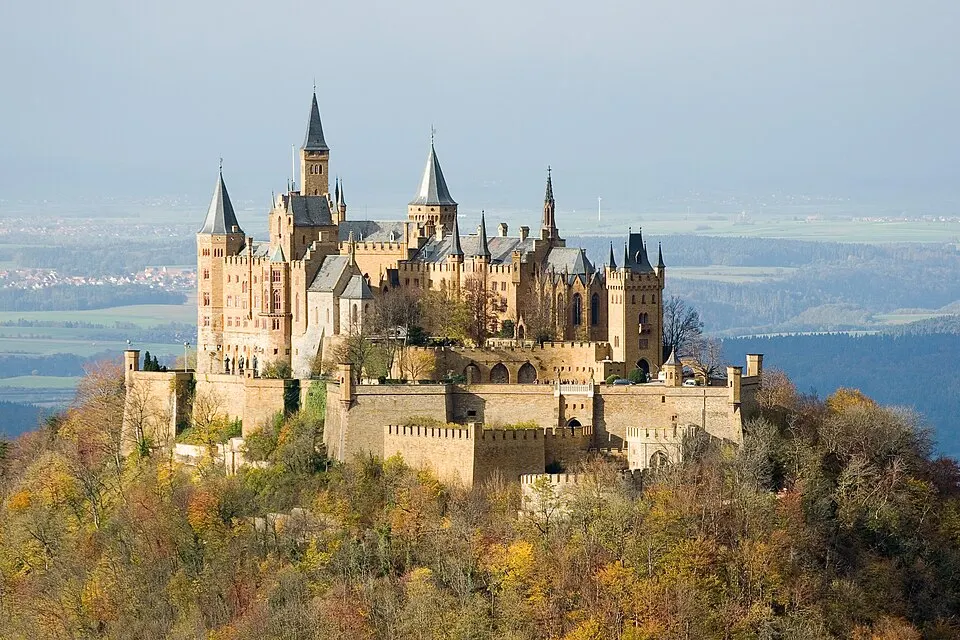
Hohenzollern Castle stands on an 855-metre peak at the edge of the Swabian Jura. The Neo-Gothic castle you see today was built from 1850 for King Frederick William IV of Prussia to designs by Friedrich August Stüler, and completed in 1867. It is still privately owned by the House of Hohenzollern. The treasury holds the crown of Wilhelm II, set with 18 brilliants and 142 rose-cut diamonds.
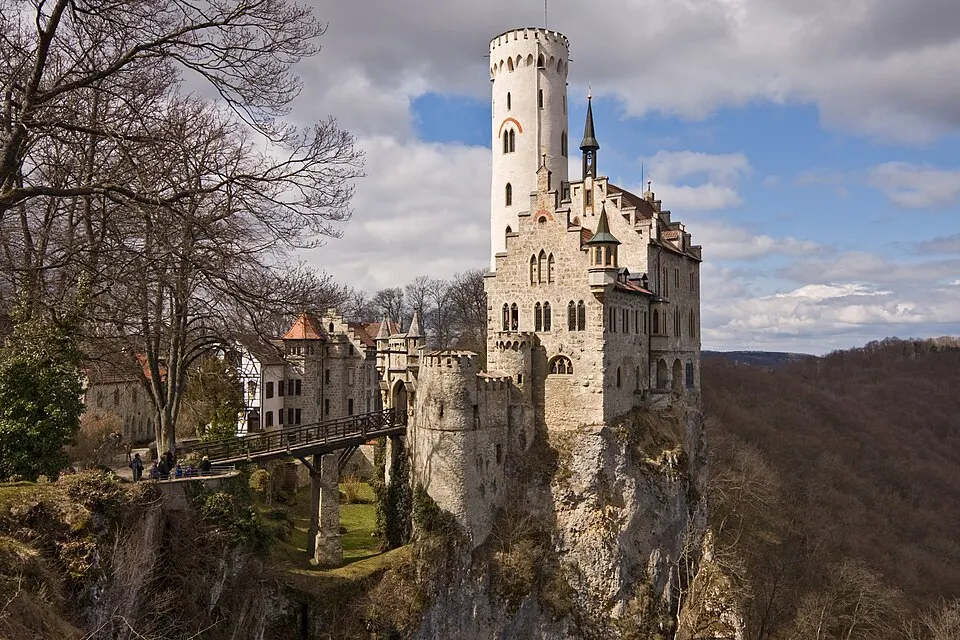
Also in the Swabian Jura, Lichtenstein Castle perches on a crag 817 metres above sea level, high above the Echaz valley. It owes its existence to a novel: Wilhelm Hauff’s “Lichtenstein” of 1826 inspired Count Wilhelm of Württemberg to build a Gothic Revival knight’s castle here in 1840–1842. It still belongs to his descendants and can be visited on guided tours.
Heidelberg, the Elz valley and the Rhine
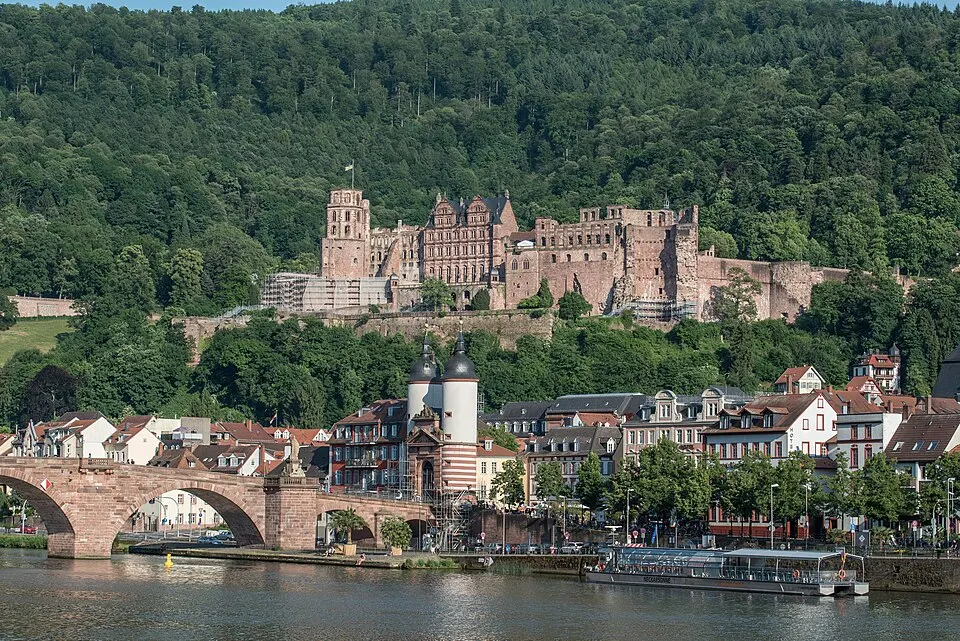
Heidelberg Castle is the ruin on this list, and perhaps the most romantic place of all. For almost three centuries, the red sandstone castle above the old town was the residence of the Electors Palatine. French troops destroyed it in 1689 and 1693, and after a fire caused by lightning in 1764 it remained a ruin. Romanticism turned it into a place of longing, and today it is one of Europe’s most visited sights.
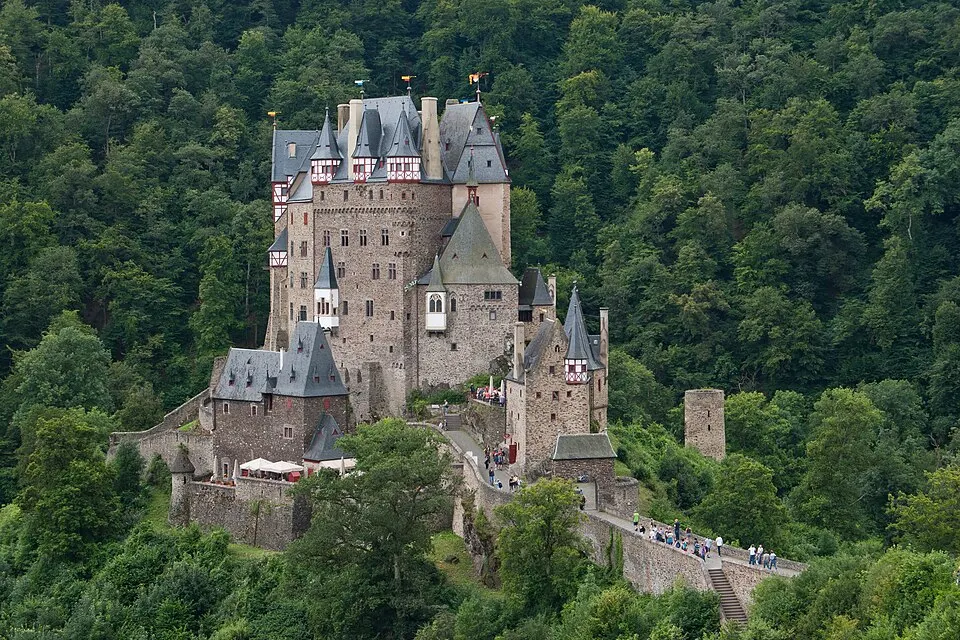
Eltz Castle sits in the Elz valley in Rhineland-Palatinate. It has belonged to the same family for more than 800 years and was never taken by force. The name Eltz first appears in 1157, in a charter of Frederick Barbarossa. Three branches of the family shared the castle, and their residential towers still shape its outline; at times more than 100 people lived here, servants included. The castle was also pictured on the back of the 500 Deutsche Mark banknote.
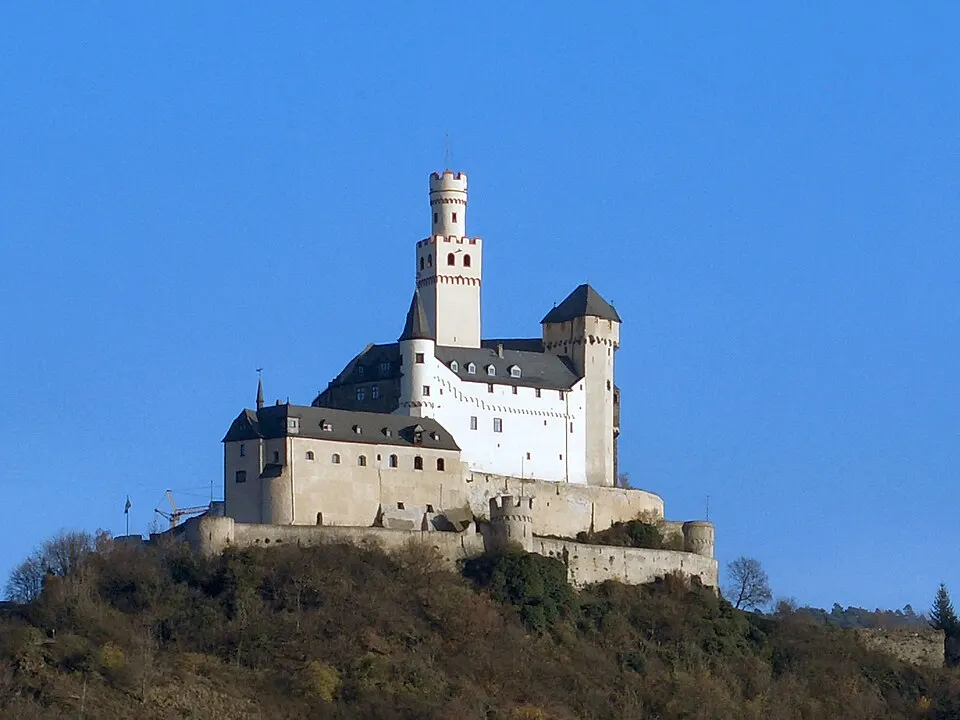
High above Braubach on the Rhine, the Marksburg is a relatively authentically preserved late medieval hill castle. Since 1900 it has belonged to the German Castles Association, which runs a castle museum here. Its garden, laid out in 1969, grows around 170 herbs and medicinal plants known in the Middle Ages.
Thuringia, Potsdam and the north
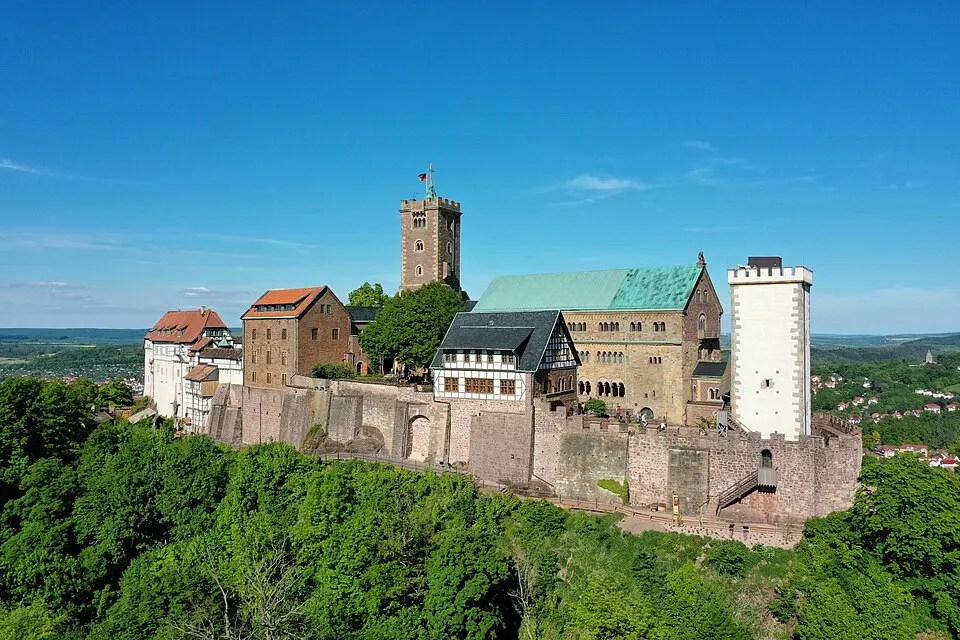
The Wartburg above Eisenach is where Martin Luther, hiding as “Junker Jörg” in 1521–22, translated the New Testament into German. St Elisabeth lived here, and in 1817 some 500 students gathered at the castle for the first Wartburg Festival, calling for a united Germany. It has been a UNESCO World Heritage Site since 1999. Ludwig II took it as a model for Neuschwanstein, which brings this list full circle.
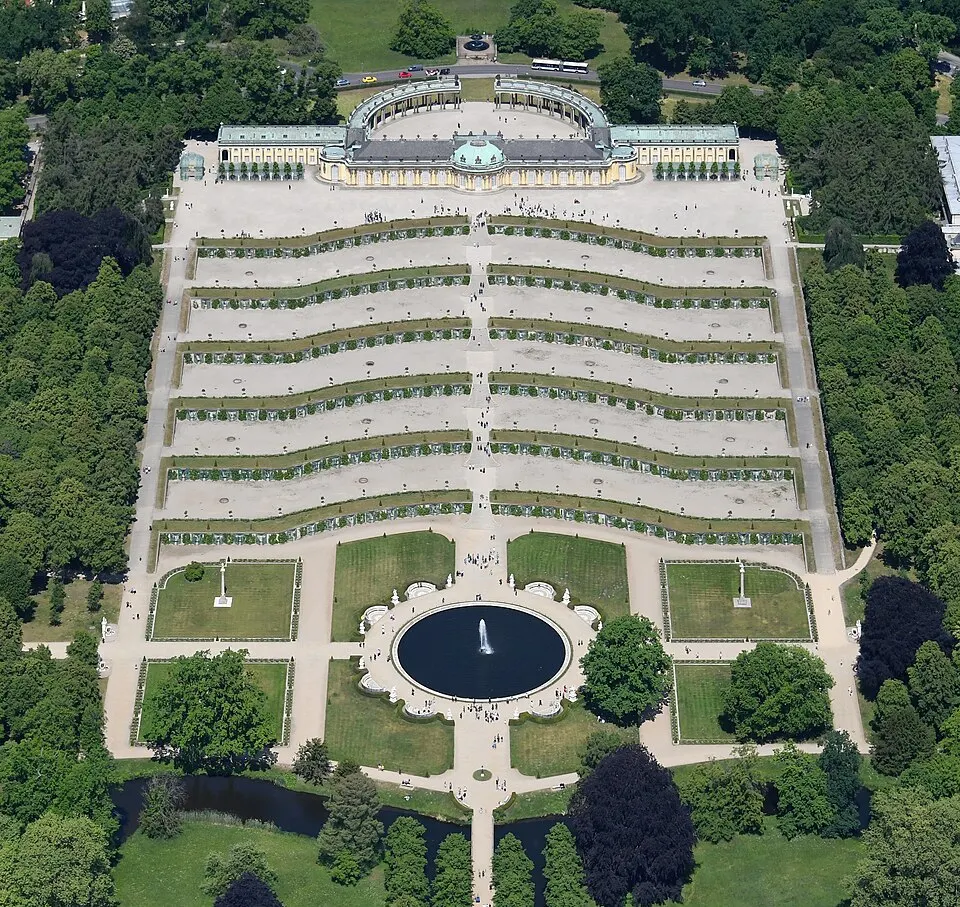
Sanssouci in Potsdam is a palace rather than a castle: Frederick the Great’s intimate Rococo summer palace above vineyard terraces. Georg Wenzeslaus von Knobelsdorff built it to the king’s own sketches between 1745 and 1747. Frederick spent his summers here, died here in 1786 and was buried here in 1991. Visitors leave flowers and potatoes on his simple gravestone, recalling his potato decree. Sanssouci has been a UNESCO World Heritage Site since 1990.
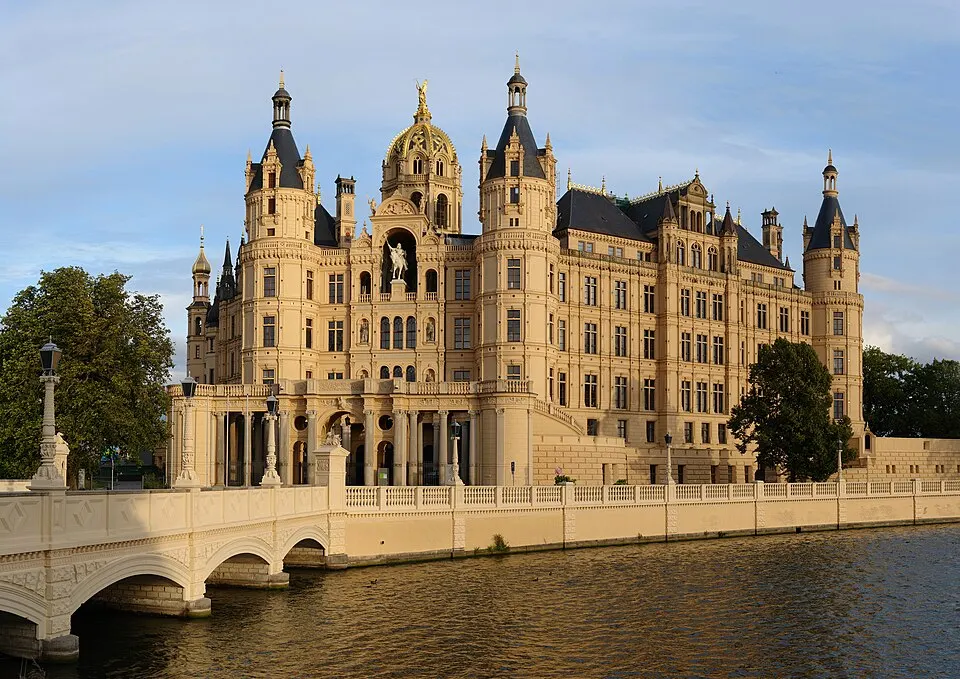
Last, Schwerin Castle rises from an island in Lake Schwerin and is sometimes called the “Neuschwanstein of the North”. Georg Adolph Demmler and Friedrich August Stüler, the architect of Hohenzollern Castle, gave it its present appearance by 1857. Today it houses the state parliament, and since 2024 it has been a UNESCO World Heritage Site. Legend has it that a ghost called Petermännchen haunts the castle; you can find his sculpture on the courtyard façade.
Before you go
Opening times, tickets and tours change, so check the official website before you go. Each castle’s page on our site links to it.
If you would like to keep these ten, and many more, at hand on the road, the Castellia app has history, facts and photos for castles in Germany and Austria, in six languages.