Wartburg
Castle · Thuringia, Germany · Built from 1067
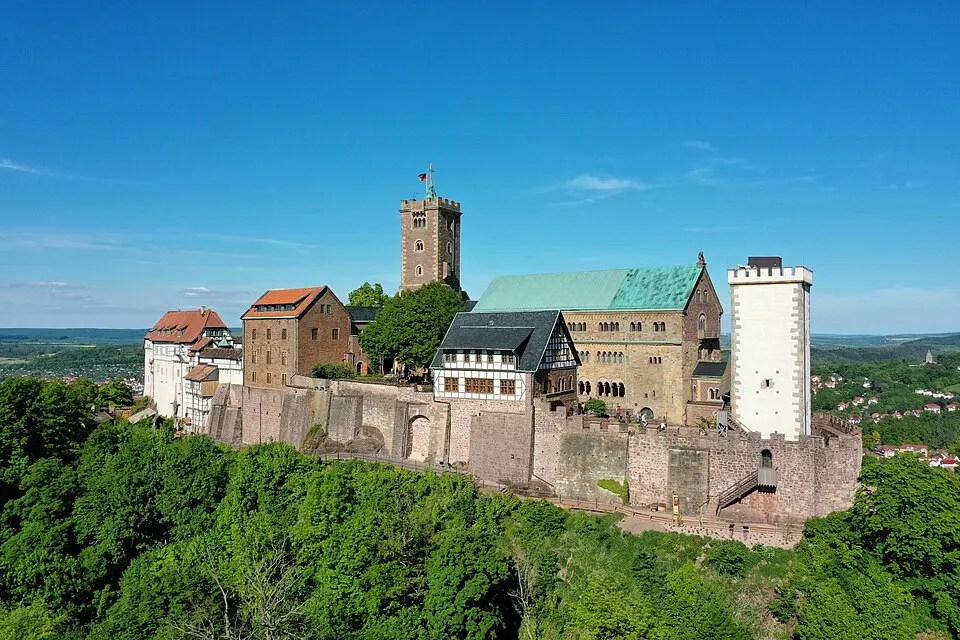
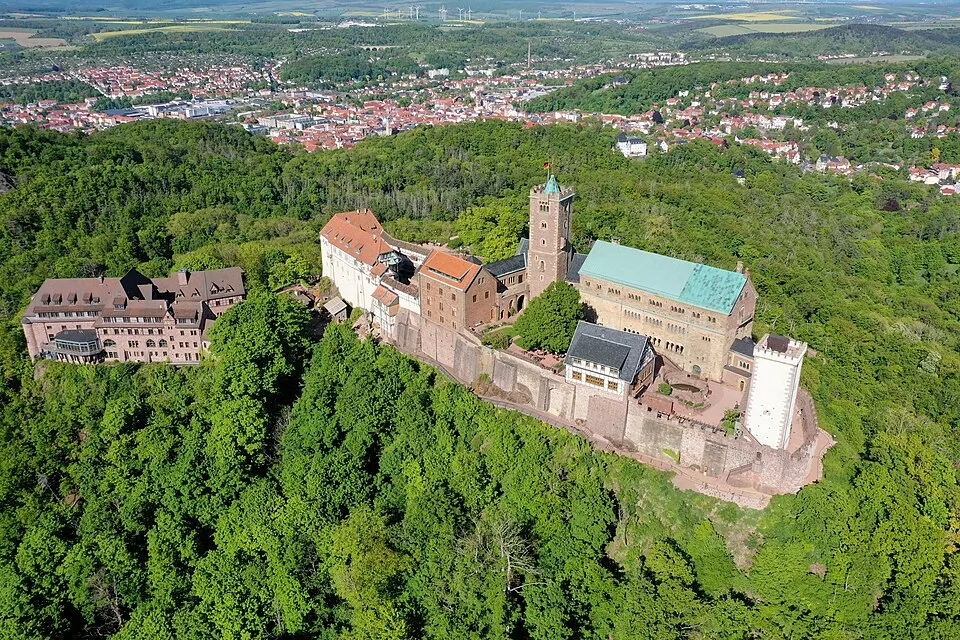
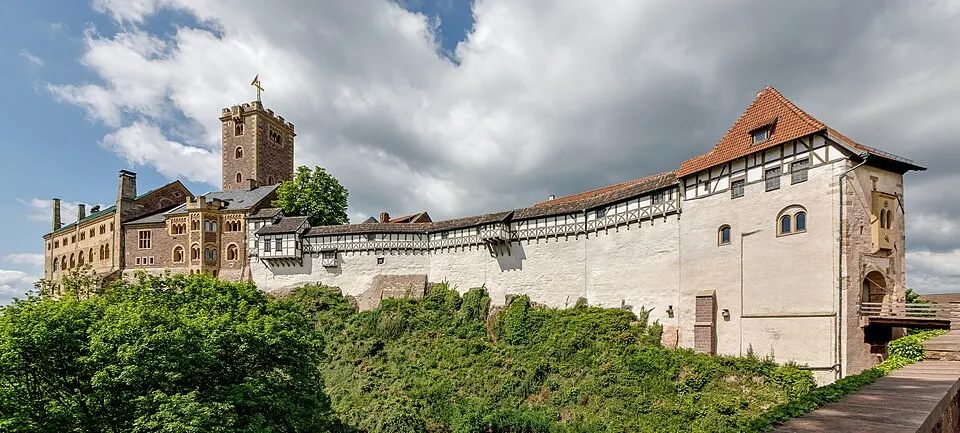
The castle above Eisenach where Luther translated the New Testament, a UNESCO World Heritage Site with one of the most important Romanesque palaces.
Interesting facts
- In 1521–22 Martin Luther hid at the castle as "Junker Jörg" and translated the New Testament into German here.
- Tree-ring analysis dates the timber beams in the lower floor of the Romanesque palace to 1157/1158.
- The colourful glass mosaics of the Elisabeth Bower were created between 1902 and 1906 commissioned by Kaiser Wilhelm II.
- King Ludwig II of Bavaria took the Wartburg as a model for Neuschwanstein Castle and even had its banqueting hall imitated.
- In the Minstrels' Hall, frescoes by Moritz von Schwind tell the legend of the Sängerkrieg, the singers' contest.
History
Louis the Springer laid the foundations around 1067, and the castle is first mentioned in writing in 1080. Under the Landgraves of Thuringia the palace was built in the 12th century, and under Hermann I the Wartburg became a centre of poetry, where St Elisabeth also lived. In 1521–22 Martin Luther found refuge here, and in 1817 some 500 students gathered for the first Wartburg Festival, calling for a united Germany. Grand Duke Charles Alexander had the dilapidated castle restored from 1838 to 1890 to designs by Hugo von Ritgen; it has been a UNESCO World Heritage Site since 1999.
Plan your visit
Auf der Wartburg 1, 99817 Eisenach, Eisenach, Deutschland
Current opening hours and tickets are on the official website.